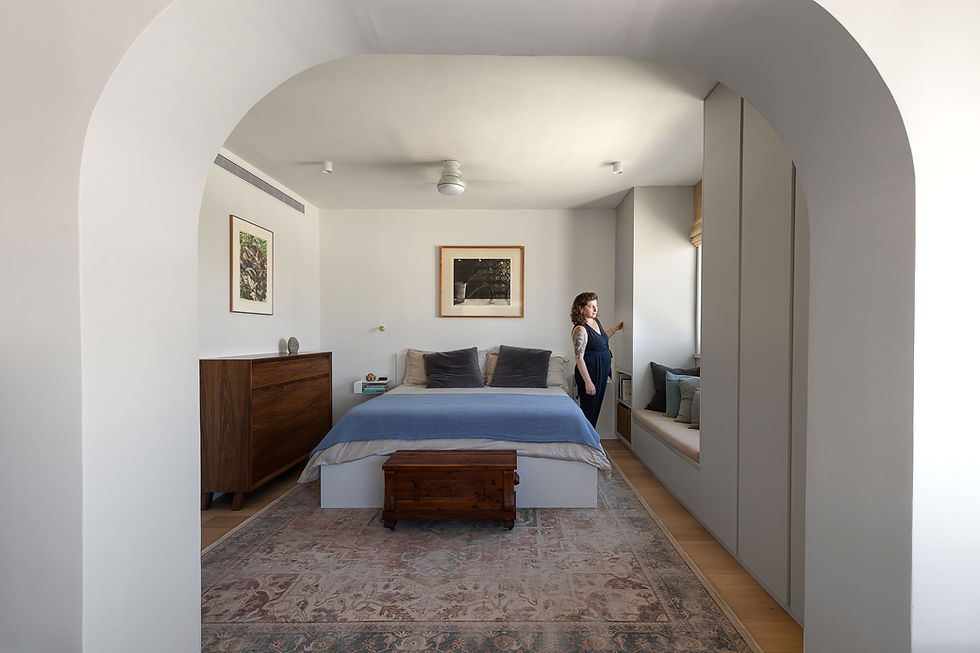
Beyond standard: a new apartment customization model for high-end residential developments

Updated: Aug 12
The customization stage of a property is a defining moment in a residential development project, where design, specs, and project management are tested. The gap between the buyer’s expectations and the reality of the typical customization and upgrade process often creates friction and undermines the overall customer experience. On the developer's end, multiple complex demands strain the system and challenge effective management of the process. An alternative model delivers tangible value for both sides: meticulously pre-planned apartments with a structured upgrading framework, allowing developers to maintain full control of the process, while enabling buyers to conveniently customize and personalize their home.
TL;DR
The apartment customization stage is a pivotal customer experience moment Value, design quality, and project management are put to the test, often creating friction.
Detailed planning and curated design packages deliver a premium experience and high-end result Layout variations tailored to buyer profiles, upgrading options and design alternatives are pre-packaged, eliminating the buyer's need to retain external architects and designers.
A smooth, user-friendly apartment customization process
Customization is made simple and convenient within a clear hierarchy of optional add-ons.
Optimization for both buyer and developer A clear, professional and friendly process, that aligns expectations and sets the project up for success.
From reactive to strategic apartment customization
The apartment customization process in residential developments is often complex and unfriendly. Projects are marketed as offering high standards and a wide selection of finishing materials, while interior planning remains largely generic. The buyer soon discovers that a significant additional investment is required to bring the property up to an appropriate living standard, and the gap emerging at the outset of the professional relationship erodes trust, diminishing the customer experience.
External architects and interior designers then enter the picture to assist the buyer, leaving the developer to manage and coordinate special requests that place strain on project management and execution. The customization stage becomes reactive in nature, blurring the lines of responsibility between the parties involved and making the process difficult to manage.
A new model reshapes this dynamic in high-end residential developments. Instead of juggling multiple complex processes, the typical units are meticulously planned in advance, at a level comparable to residential interior design projects in the private sector. Each apartment type offers several layout alternatives based on potential buyer profiles, and complemented by detailed infrastructure plans. This allows the developer to define the upgrade menu, quantify costs, and give buyers a clear and convenient framework for selecting optional add-ons.

Meticulously planed typical units, a structured upgrade menu, and pre-defined design packages replace the conventional apartment customization model
In addition to the core systems, optional high-end ones such as underfloor heating, sound and security systems, or any other feature the developer chooses to include in the upgrade menu are planned in advance as well. This approach ensures full control of the process while eliminating the operational strain arising from integrating and coordinating the work of external architects and interior designers representing individual buyers.
Unlike common practice in development projects, millwork is approached as an integral part of the planning strategy, aimed at maximizing spatial potential. Custom millwork design for the typical units enables optimized space utilization, high-quality storage solutions, and seamless coordination with building systems - particularly significant in relatively compact apartments. As this is strategically implemented at a project-wide scale rather than as a one-off solution, it creates cost efficiencies for the developer while offering meaningful added value to the buyer.
Finally, conceptual design mood boards are curated, inspired by the architectural and environmental context of the project, illustrating material palettes in three distinct design directions (referred to here as Mediterranean, Modern, and Elegant). The mood boards serve as a basis for photorealistic 3D visualizations, allowing buyers to clearly envision the final outcome, while also providing the developer with high-quality visual assets for marketing purposes.

The apartment customization process transformed into a premium customer experience in high-end development projects
Selecting from a clear and carefully curated menu simplifies decision-making and enhances the overall customer experience. Instead of facing an overload of open-ended choices, buyers are confidently guided within a structured and professionally defined framework.
With the aim of eliminating the buyer's need to retain an external architect or interior designer, the planning standard is high to begin with, systems are fully coordinated, and the information is presented in a brochure illustrating a clear hierarchy between:
Basic specifications included in the purchase package
Upgrades to core systems, such as additional electrical, lighting, and plumbing points
Optional high-end features, such as underfloor heating, custom millwork, sound and alarm systems etc.
Design packages based on the project’s predefined material menu are the highlight of the process, offering buyers a sense of personalization. Choosing the design from a curated set of options offers an experience of choice and personal connection without navigating an endless series of decisions. Thus a typical unit is transformed into a home through a professional, enjoyable, and efficient process - for both buyer and developer.
New model transforms the apartment customization process from a weak link into a strategic asset
The customization process shifts, from a challenging and weak point into a central component that delivers value and strengthens the developer’s brand. Rather than improvise, developers operate within a structured system that clearly defines design alternatives, upgrade options, and project standards - from the outset. The customization process is handled in-house, within a proactive, organized, and pre-priced framework, without external architects and designers involved.

Through my work as an interior designer in the private residential sector, I witnessed the inefficiencies of conventional customization models and the frustration they create for both buyers and developers. This insight led to the development of an alternative model: meticulously planned typical units complemented by an efficient, well-structured customization system, that aligns expectations and delivers tangible value to both parties.
This model regards the customization stage as an organic part of the architectural planning process, set in direct continuation to the value promised at the point of sale. The result is a cohesive and well-managed client experience that builds trust, reduces friction, and positively reinforces the developer’s brand. It sets a new standard for residential developments, replacing the conventional customization model with an effective, professional, and user-friendly one, where buyers benefit from a comprehensive, curated offering, while developers streamline operations and position their projects at a high-end level.